Wednesday, 18 September 2013

Marcelino Pan Y Vino and "I Thirst"


Marcelino, Pan y Vino
http://leelibros.com/biblioteca/index.php?q=marcelino_pan_y_vino_0

Was it a mere coincidence that I happened to watch the programme 'Movie Light 'in Goodness TV last night? The way Fr. Benny narrated the story of the Spanish movie "Marcelino Pan y Vino" ( Marcelino Bread and Wine)and the tear jerking visuals  really do make one think a little deeper on the Love of the Crucified Saviour! 
Surprisingly, it is not the usual miracle - like Jesus consoling and pacifying an abandoned orphan kid- that makes the theme of the movie . On the contrary, it is the abandoned boy who is consoling the suffering Man on the Cross. The five year old boy, who has not yet been taught who Jesus is, feels a sort of empathy towards Him, when he finds Him abandoned in the cluttered attic of the monastery, . He knows the pain of abandonment, after all! So he sets out to console and pacify the Lonely Man on the Cross in the attic! The boy feels that the Man is hungry and thirsty, and he sneaks Bread and Wine from the monastery kitchen and offers it to the Suffering Man on the Cross. By the time, the Man has also become the boy's sole Friend and Confidante!! Now comes the miracle. The statue of Jesus on the Cross comes alive. He reaches out His hand to accept the boy's bread!Later, He even comes down from the Cross to sit on the huge chair drawn to the table by the little boy.The climax of the story brings all the friars, including the superior up to the attic, as they burst out in tears - of repentance, I'm afraid! What a story! And how convincing!!!
    I thought I had forgotten all about this movie, until this  morning ,when I happened to read, rather was driven to read ( by who else but my dear Angel) the "33 Days Morning Glory" by Fr. Michael E Gaitley MIC. And there in lay the decoding of the symbolic meaning of Marcelino Pan y Vino! The true meaning of the movie lies in a letter written by Mother Teresa of Kolkota to her Missionaries of Charity, just four years before her death. She was inspired to write this letter on March 25, 1993, after reading the Lenten Message of Pope John Paul II on "I Thirst". Let me cite the whole section as Fr. Michael has done in his book:


      You all know in your mind that Jesus loves you – but in this letter Mother wants to touch           your heart instead. Jesus wants to stir up our hearts, so not to lose our early love, specially         in the future after Mother leaves you. That is why I ask you to read this letter before the            Blessed Sacrament, the same place it was written, so Jesus himself can speak to you each         one.
Why is Mother saying these things?. After reading Holy Father’s letter on "I thirst," I was struck so much – I cannot tell you what I felt. His letter made me realize more than ever how beautiful is our vocation. How great God’s love for us in choosing our Society to satiate that thirst of Jesus, for love, for souls – giving us our special place in the Church. At the same time we are reminding the world of His thirst, something that was being forgotten. I wrote Holy Father to thank him. Holy Father’s letter is a sign for our whole society – to go more into this great thirst of Jesus for each one. It is also a sign for Mother, that the time has come for me to speak openly of the gift God gave September 10 – to explain fully as I can what means for me the thirst of Jesus.For me Jesus’ thirst is something so intimate – so I have felt shy until now to speak to you of September 10 – I wanted to do as Our Lady who "kept all these things in her heart." That is why Mother hasn’t spoken so much of I Thirst, especially outside. But still, Mother’s letters and instructions always point to it – showing the means to satiate His thirst through prayer, intimacy with Jesus, living our vows – specially our 4th vow. For me it is so clear – everything in MC exists only to satiate Jesus. His words on the wall of every MC chapel, they are not from the past only, but alive here and now, spoken to you. Do you believe it? If so, you will hear, you will feel His presence. Let it become as intimate for each of you, just as for Mother – this is the greatest joy you could give me. Mother will try to help you understand – but Jesus himself must be the one to say to you "I Thirst." Hear your own name. Not just once. Every day. If you listen with your heart, you will hear, you will understand.Why does Jesus say "I Thirst"? What does it mean? Something so hard to explain in words – if you remember anything from Mother’s letter, remember this – "I thirst" is something much deeper than Jesus just saying "I love you." Until you know deep inside that Jesus thirsts for you – you can’t begin to know who He wants to be for you. Or who He wants you to be for Him.The heart and soul of MC is only this – the thirst of Jesus’ Heart, hidden in the poor. This is the source of every part of MC life. It gives us our Aim, our 4th vow, the Spirit of our Society. Satiating the living Jesus in our midst is the Society’s only purpose for existing. Can we each say the same for ourselves – that it is our only reason for living? Ask yourself – would it make any difference in my vocation, in my relation to Jesus, in my work, if Jesus’ thirst were no longer our aim – no longer on the chapel wall? Would anything change in my life? Would I feel any loss? Ask yourself honestly, and let this be a test for each to see if His thirst is a reality, something alive – not just an idea."I Thirst" and "You did it to me" – Remember always to connect the two, the means with the Aim. What God has joined together let no one split apart. Do not underestimate our practical means – the work for the poor, no matter how small or humble – that make our life something beautiful for God. They are the most precious gifts of God to our Society – Jesus’ hidden presence so near, so able to touch. Without the work for the poor the Aim dies – Jesus’ thirst is only words with no meaning, no answer. Uniting the two, our MC vocation will remain alive and real, what Our Lady asked.The thirst of Jesus is the focus of all that is MC. The Church has confirmed it again and again – "Our charism is to satiate the thirst of Jesus for love and souls – by working at the salvation and sanctification of the poorest of the poor." Nothing different. Nothing else. Let us do all we can to protect this gift of God to our Society.Believe me, my dear children – pay close attention to what Mother is saying now - only the thirst of Jesus, hearing it, feeling it, answering it with all your heart, will keep the Society alive after Mother leaves you. If this is your life, you will be all right. Even when Mother leaves you, Jesus’ thirst will never leave you. Jesus thirsting in the poor you will have with you always.That is why I want the Active Sisters and Brothers, the Contemplative Sisters and Brothers, and the Fathers to each one aid the other in satiating Jesus with their own special gift – supporting, completing each other and this precious Grace as one Family, with one Aim and purpose. Do not exclude the Coworkers and Lay MCs from this – this is their call as well, help them to know it.Because the first duty of a priest is the ministry to preach, some years back I asked our Fathers to begin speaking about I Thirst, to go more deeply into what God gave the Society September 10. I feel Jesus wants this of them, also in the future – so pray Our Lady keeps them in this special part of their 4th vow. Our Lady will help all of us in this, since she was the first person to hear Jesus’ cry I Thirst with St. John, and I am sure Mary Magdalen. Because she was there on Calvary, she knows how real, how deep His longing for you and for the poor. Do we know? Do we feel as she? Ask her to teach – you and the whole Society are hers. Her role is to bring you face to face, as John and Magdalen, with the love in the Heart of Jesus crucified. Before it was Our Lady pleading with Mother, now it is Mother, in her name pleading with you – "listen to Jesus’ thirst." Let it be for each what Holy Father said in his letter – a Word of Life.How do you approach the thirst of Jesus? Only one secret – the closer you come to Jesus, the better you will know His thirst. "Repent and believe," Jesus tells us. What are we to repent? Our indifference, our hardness of heart. What are we to believe? Jesus thirsts even now, in your heart and in the poor – He knows your weakness, He wants only your love, wants only the chance to love you. He is not bound by time. Whenever we come close to Him – we become partners of Our Lady, St. John, Magdalen. Hear Him. Hear your own name. Make my joy and yours complete.Let us pray.
     
 http://www.mcpriests.com/15legacy/varanasi.htm
Excerpts from a letter to the Missionaries of Charity, Easter, 1993.
 

http://www.saintlyquotations.com/2013/06/mother-teresa-quotation-kiss-from-cross.html

Mother Teresa: The Kiss from the Cross


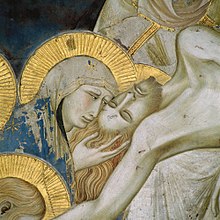
Suffering has to come because if you look at the cross, he has got his head bending down - he wants to kiss you - and he has both hands open wide - he wants to embrace you. He has his heart opened wide to receive you. Then when you feel miserable inside, look at the cross and you will know what is happening. Suffering, pain, sorrow, humiliation, feelings of loneliness, are nothing but the kiss of Jesus, a sign that you have come so close that he can kiss you. Do you understand, brothers, sisters, or whoever you may be? Suffering, pain, humiliation - this is the kiss of Jesus. At times you come so close to Jesus on the cross that he can kiss you. I once told this to a lady who was suffering very much. She answered, "Tell Jesus not to kiss me - to stop kissing me." That suffering has to come that came into the life of Our Lady, that came in the life of Jesus - it has to come in our life also. Only never put on a long face. Suffering is a gift from God. It is between you and Jesus alone inside.

- Mother Teresa of Calcutta

Tuesday, 17 September 2013

Mary, the Incomparable Daughter of Zion

The Icon of Our Lady of the Sign (Greek: Panagia or Παναγία; Old Church Slavonic: Ikona Bozhey Materi "Znamenie"; Polish: Ikona Bogurodzicy "Znak" ') is the term for a particular type of icon of the Theotokos (Virgin Mary), facing the viewer directly, depicted either full length or half, with her hands raised in the oransposition, and with the image of the Child Jesus depicted within a round aureole upon her breast.  http://en.wikipedia.org/wiki/Our_Lady_of_the_Sign


I am catching up with my reading habit. But these days I prefer to read slowly, reflecting on what I am reading. It is because what I read these days is real stuff !! Yesterday I read just 20 pages of Spe Salvi by Pope Benedict XVI.(Gasp........!!! Couldn't read any more than that because of the intensity of the matter discussed there.) I especially loved the part where our dear Pope Emeritus mentions St Gregory of Nazianzen :
In this regard a text by Saint Gregory Nazianzen is enlightening. He says that at the very moment when the Magi, guided by the star, adored Christ the new king, astrology came to an end, because the stars were now moving in the orbit determined by Christ[2]. This scene, in fact, overturns the world-view of that time, which in a different way has become fashionable once again today. It is not the elemental spirits of the universe, the laws of matter, which ultimately govern the world and mankind, but a personal God governs the stars, that is, the universe; it is not the laws of matter and of evolution that have the final say, but reason, will, love—a Person. And if we know this Person and he knows us, then truly the inexorable power of material elements no longer has the last word; we are not slaves of the universe and of its laws, we are free. In ancient times, honest enquiring minds were aware of this. Heaven is not empty. Life is not a simple product of laws and the randomness of matter, but within everything and at the same time above everything, there is a personal will, there is a Spirit who in Jesus has revealed himself as Love[3]
And the next paragraph (para 6) also is quite enlightening . It is about how  the Christian art seen on the Sacrophagi of the early Christian era   illustrates the concept of  Christ as the Shepherd  Philosopher. (That reminded me also of the logo of CCC).http://idlespeculations-terryprest.blogspot.in/2007/12/philosophers-and-shepherds.htmlhttp://en.wikipedia.org/wiki/Catechism_of_the_Catholic_Church
Towards the end of the third century, on the sarcophagus of a child in Rome, we find for the first time, in the context of the resurrection of Lazarus, the figure of Christ as the true philosopher, holding the Gospel in one hand and the philosopher's travelling staff in the other. With his staff, he conquers death; the Gospel brings the truth that itinerant philosophers had searched for in vain. In this image, which then became a common feature of sarcophagus art for a long time, we see clearly what both educated and simple people found in Christ: he tells us who man truly is and what a man must do in order to be truly human. He shows us the way, and this way is the truth. He himself is both the way and the truth, and therefore he is also the life which all of us are seeking. He also shows us the way beyond death; only someone able to do this is a true teacher of life. The same thing becomes visible in the image of the shepherd. As in the representation of the philosopher, so too through the figure of the shepherd the early Church could identify with existing models of Roman art...
Now I must slowly take my time to meditate on these 20 pages.  . Meanwhile, let me  take a break from Spe Salvi !That has led me to "33 days of Morning Glory - A do-it yourself Retreat in preparation for Marian Consecration" by Michael Gaitley. But I will have to wait for a few more weeks to start the retreat because the next suitable date to start is October 19  so as to make the consecration on November 21, the feast of the Presentation of Mary.So I thought I'd just browse through the Week 4 section - Bl. John Paul II, "the most Marian Pope". I have a copy of  JP II's "Gift and  Mystery".Must read that too. And also I am thinking of taking an informal one-month retreat with Mary, my Mother. For that, I have Gabriel Amorth SSP's 'The Gospel of Mary - A Month with the Mother of God'. It must be light reading because it is about my Mother! But the first day's chapter itself has already led me to refer the 8th section of 'Lumen Gentium' -  "The Blessed Virgin Mary, Mother of God in the Mystery of Christ and the Church" 
:
 II. The Role of the Blessed Mother in the Economy of Salvation

http://taylormarshall.com/2013/03/mary-untier-of-knots-pope-francis.html
 Pope Francis has a very special devotion to Our Lady Untier of Knots. 

55. The Sacred Scriptures of both the Old and the New Testament, as well as ancient Tradition show the role of the Mother of the Saviour in the economy of salvation in an ever clearer light and draw attention to it. The books of the Old Testament describe the history of salvation, by which the coming of Christ into the world was slowly prepared. These earliest documents, as they are read in the Church and are understood in the light of a further and full revelation, bring the figure of the woman, Mother of the Redeemer, into a gradually clearer light. When it is looked at in this way, she is already prophetically foreshadowed in the promise of victory over the serpent which was given to our first parents after their fall into sin.(284) Likewise she is the Virgin who shall conceive and bear a son, whose name will be called Emmanuel.(285) She stands out among the poor and humble of the Lord, who confidently hope for and receive salvation from Him. With her the exalted Daughter of Sion, and after a long expectation of the promise, the times are fulfilled and the new Economy established, when the Son of God took a human nature from her, that He might in the mysteries of His flesh free man from sin.


56. The Father of mercies willed that the incarnation should be preceded by the acceptance of her who was predestined to be the mother of His Son, so that just as a woman contributed to death, so also a woman should contribute to life. That is true in outstanding fashion of the mother of Jesus, who gave to the world Him who is Life itself and who renews all things, and who was enriched by God with the gifts which befit such a role. It is no wonder therefore that the usage prevailed among the Fathers whereby they called the mother of God entirely holy and free from all stain of sin, as though fashioned by the Holy Spirit and formed as a new creature.(5*) Adorned from the first instant of her conception with the radiance of an entirely unique holiness, the Virgin of Nazareth is greeted, on God's command, by an angel messenger as "full of grace",(286) and to the heavenly messenger she replies: "Behold the handmaid of the Lord, be it done unto me according to thy word".(287) Thus Mary, a daughter of Adam, consenting to the divine Word, became the mother of Jesus, the one and only Mediator. Embracing God's salvific will with a full heart and impeded by no sin, she devoted herself totally as a handmaid of the Lord to the person and work of her Son, under Him and with Him, by the grace of almighty God, serving the mystery of redemption. Rightly therefore the holy Fathers see her as used by God not merely in a passive way, but as freely cooperating in the work of human salvation through faith and obedience. For, as St. Irenaeus says, she "being obedient, became the cause of salvation for herself and for the whole human race."(6*) Hence not a few of the early Fathers gladly assert in their preaching, "The knot of Eve's disobedience was untied by Mary's obedience; what the virgin Eve bound through her unbelief, the Virgin Mary loosened by her faith."(7*) Comparing Mary with Eve, they call her "the Mother of the living,"(8*) and still more often they say: "death through Eve, life through Mary."(9*)
http://www.vatican.va/archive/hist_councils/ii_vatican_council/documents/vat-ii_const_19641121_lumen-gentium_en.html
That much for today. Below are two Post Vatican Council II quotes on BVM by none else than JPII and Pope Paul VI:
" ...through the mystery of Christ, on the horizon of the Church's faith there shines in its fullness the mystery of his Mother." Bl. John Paul II in Redemptoris Mater

 The Catholic Church, endowed with centuries of experience, recognizes in devotion to the Blessed Virgin a powerful aid for man as he strives for fulfillment. Mary, the New Woman, stands at the side of Christ, the New Man, within whose mystery the mystery of man(124) alone finds true light; she is given to its as a pledge and guarantee that God's plan in Christ for the salvation of the whole man has already achieved realization in a creature: in her. Contemplated in the episodes of the Gospels and in the reality which she already possesses in the City of God, the Blessed Virgin Mary offers a calm vision and a reassuring word to modern man, torn as he often is between anguish and hope, defeated by the sense of his own limitations and assailed by limitless aspirations, troubled in his mind and divided in his heart, uncertain before the riddle of death, oppressed by loneliness while yearning for fellowship, a prey to boredom and disgust. She shows forth the victory of hope over anguish, of fellowship over solitude, of peace over anxiety, of joy and beauty over boredom and disgust, of eternal visions over earthly ones, of life over death.
- Pope Paul VI, in the concluding paragraphs of  'Marialis Cultus' 
http://www.vatican.va/holy_father/paul_vi/apost_exhortations/documents/hf_p-vi_exh_19740202_marialis-cultus_en.html

Monday, 16 September 2013

Raccolta and the Enchiridion of Indulgences


http://www.ebay.com/itm/1952-RACCOLTA-Manual-Indulgences-Prayers-Devotions-/290743018034

Following info is from wikipedia.com The Raccolta is a book, published from 1807 to 1950, that listed Roman Catholic prayers and other acts of piety, such as novenas, for which specific indulgences were granted byPopes. In 1968 it was replaced by the Enchiridion Indulgentiarum,[1][2] listing fewer specific prayers but including new general grants that apply to a wide range of prayerful actions.

By his bull Indulgentiarum Doctrina of 1 January 1967, Pope Paul VI ordered a revision of the collection of indulgenced prayers and works "with a view to attaching indulgences only to the most important prayers and works of piety, charity and penance".[8][1] Since then the official collection of the currently indulgenced prayers and good works is called the Enchiridion Indulgentiarum. The first edition appeared in June 1968.[9] As indicated in an article published on the English edition of L'Osservatore Romano of 12 December 1968, it was only one sixth the size of the last edition of the Raccolta. An English translation on the Internet is provided by Idaho Lay Dominicans. A digested account is given by Catholic Online.
The Enchiridion Indulgentiarum, which is in Latin, differs from the Italian-language Raccolta in listing "only the most important prayers and works of piety, charity and penance". On the other hand, it includes new general grants of partial indulgences that apply to a wide range of prayerful actions, and it indicates that the prayers that it does list as deserving veneration on account of divine inspiration or antiquity or as being in widespread use are only examples[10] of those to which the first these general grants applies: "Raising the mind to God with humble trust while performing one's duties and bearing life's difficulties, and adding, at least mentally, some pious invocation".[11] In this way, the Enchiridion Indulgentiarum, in spite of its smaller size, classifies as indulgenced an immensely greater number of prayers than were treated as such in the Raccolta.
The prayers listed in the Raccolta were of Latin Church tradition alone, but the Enchiridion Indulgentiarum includes also prayers from the traditions of the Eastern Catholic Churches, such as the Akathistos,Paraklesis, Evening Prayer, and Prayer for the Faithful Departed (Byzantine), Prayer of Thanksgiving (Armenian), Prayer of the Shrine and the Lakhu Mara (Chaldean), Prayer of Incense and Prayer to Glorify Mary the Mother of God (Coptic), Prayer for the Remission of Sins and Prayer to Follow Christ (Ethiopian), Prayer for the Church, and Prayer of Leave-taking from the Altar (Maronite), and Intercessions for the Faithful Departed (Syrian).

Handbook of Indulgences of the Roman Catholic Church, revised text of the Enchiridion of Indulgenceshttps://www.crossroadsinitiative.com/resource_info/284.htm

This lHandbook of Indulgences is the revised edition of the ENCHIRIDION OF INDULGENCES and the official English translation of the Roman Catholic Church’s book on indulgences.  It includes a list of the works and prayers to which indulgences are attached and therefore serves as an authoritative and very enlightening collection of devotional practices that the pastors of the Catholic Church regard as especially effective at eradicating vice, building virtue, and strengthening the soul in its battle against sin.  Every Catholic should have a copy of this short, understandable, and very practical little book.

The Enchiridion of Indulgences
The formula for obtaining a plenary indulgence are the three constants  plus any one of the variable works  as being worthy of a plenary indulgence.
The three prerequisites (Constants) of a plenary indulgence.
  1. Sacramental Confession,
  2. Communion, and
  3. Prayer for the intention of the Holy Father, all to be performed within days of each other if not at the same time.
 Quotes from 
MISERENTISSIMUS REDEMPTOR
ENCYCLICAL OF POPE PIUS XI ON REPARATION TO THE SACRED HEART :
.. For indeed if any one will lovingly dwell on those things of which we have been speaking, and will have them deeply fixed in his mind, it cannot be but he will shrink with horror from all sin as from the greatest evil, and more than this he will yield himself wholly to the will of God, and will strive to repair the injured honor of the Divine Majesty, as well by constantly praying, as by voluntary mortifications, by patiently bearing the afflictions that befall him, and lastly by spending his whole life in this exercise of expiation.


...making expiation, a duty which is to be fulfilled by fitting exercises of devotion and of the virtues; hence lastly, to omit other things, come the devotions and solemn demonstrations for the purpose of making reparation to the offended Divine honor, which are inaugurated everywhere, not only by pious members of the faithful, but by parishes, dioceses and cities.

Sunday, 15 September 2013

Reparation , as a Catholic Tradition - What I have discovered from Wikipedia

Here is what I have gathered from Wikipedia about Reparation in Catholic Tradition. 
I note this down here , as a starting point from where I can do further research on this subject of Reparation in the Catholic Tradition. 
In his encyclical Miserentissimus Redemptor Pope Pius XI defined reparation as follows:
The creature's love should be given in return for the love of the Creator, another thing follows from this at once, namely that to the same uncreated Love, if so be it has been neglected by forgetfulness or violated by offense, some sort of compensation must be rendered for the injury, and this debt is commonly called by the name of reparation.[2]
Pope John Paul II referred to reparation as the "unceasing effort to stand beside the endless crosses on which the Son of God continues to be crucified".[3]
The need for prayers of reparation has also been emphasized within messages reported as part of Marian apparitions. A key recent example is the apparition of Our Lady of Akita in 1973 in which Sister Agnes Sasagawa reported the following message from the Blessed Virgin Mary:
"Many men in this world afflict the Lord. I desire souls to console Him to soften the anger of the Heavenly Father."
In 1988, Joseph Cardinal Ratzinger (later Pope Benedict XVI), as the Prefect of the Congregation for the Doctrine of the Faith provided a definitive judgement on the Akita messages as reliable and worthy of belief.[4]
The need for prayers of repentance, reparation and penance was also emphasized in the reported messages of Our Lady of Kibeho in 1982.

Theological issues[edit source | editbeta]

From a theological view, reparation is closely connected with those of atonement and satisfaction, and thus belonging to some of the deepest mysteries of the Christian Faith. Christian theology teaches that man is a creature who has fallen into original sin from an original state of grace in which he was created, and that through the Incarnation,Passion, and Death of Jesus Christ, he has been redeemed and restored again in a certain degree to the original condition.
Roman Catholic theology asserts that it was by voluntary submission that Jesus Christ died on the cross to atone for man's disobedience and sin and that his death made reparation for the sins and offenses of the world. Catholicism professes that by adding their prayers, labours, and trials to the redemption won by Christ's death, Christians can attempt to make reparation to God for their own offenses and those of others. Protestant Christians believe that the prize is already won by Christ for those who believe, wholly apart from their merit, or lack thereof, and that obedience and service to Christ is an outflowing of the new life that he purchased for them in his death on the cross.
The theological doctrine of reparation is the foundation of the numerous confraternities and pious associations which have been founded, especially in modern times, to make reparation to God for the sins of men. The Archconfraternity of Reparation for blasphemy and the neglect of Sunday was founded 28 June, 1847, in the Church of St. Martin de La Noue at St. Dizier in France by Mgr. Parisis, Bishop of Langres. With a similar object, the Archconfraternity of the Holy Face was established at Tours, about 1851, through the piety of M. Dupont, the "holy man of Tours". In 1883 an association was formed in Rome to offer reparation to God on behalf of all nations. The idea of reparation is an essential element in the devotion of the Sacred Heart, and acts of reparation were once common public devotions in Roman Catholic churches. One of the ends for which the Eucharist is offered is for reparation. A pious widow of Paris conceived the idea of promoting this object in 1862. By the authority of Pope Leo XIII the erection of the Archconfraternity of the Mass of Reparation was sanctioned in 1886.
A number of prayers as an Act of Reparation to the Virgin Mary appear in the Raccolta Catholic prayer book (approved by a Decree of December 15 1854, and published in 1898 by the Holy See). The Raccolta includes a number of diverse prayers for reparation.[4]
  • The Rosary of the Holy Wounds (which does not include the usual rosary mysteries) focuses on specific redemptive aspects of Christ's suffering in Calvary, with emphasis on the souls in purgatory.[5]
  • Holy Wounds devotion[edit source | editbeta]

    According to Ann Ball, Chambon was told to revive the Holy Wounds devotion.[4] Part of this devotion can be a Chaplet of Mercy of the Holy Wounds of Jesus, which was based on Chambon's private revelations.[4] This chaplet was approved for the Institute of Visitation in 1912, and was extended to all the faithful at large by the Sacred Penitentiary in 1924.[4] According to Liz Kelly, the Rosary of the Holy Wounds was revealed to Chambon and is prayed on a standard five decade rosary.[8]

    Format of the Chaplet[edit source | editbeta]

    The chaplet consists of three prayers that are said on specific portions of the rosary beads as follows:[1][4]
    • The following prayers are said on the crucifix and first three beads:
    O JESUS, Divine Redeemer, be merciful to us and to the whole world. Amen.
    Strong God, Holy God, Immortal God, have mercy on us and on the whole world. Amen
    Grace and Mercy, O my Jesus, during present dangers; cover us with Your Precious Blood. Amen.
    ETERNAL Father, grant us mercy through the Blood of Jesus Christ, Your only Son; grant us mercy we beseech You. Amen, Amen, Amen.
    • The following prayer is said on the large beads of the rosary chain:
    Eternal Father, I offer You the Wounds of Our Lord, Jesus Christ, to heal the wounds of our souls.
    • The following prayer is said on the small beads of the rosary chain:
    My Jesus, pardon and mercy, through the merits of Your Holy Wounds.
  • A well known Act of Reparation to Jesus Christ and for the reparation of blasphemy is The Golden Arrow Holy Face Devotion (Prayer) first introduced by Sister Marie of St Peter in 1844. This devotion (started by Sister Marie and then promoted by the Venerable Leo Dupont) was approved by Pope Leo XIII in 1885.[6]
  • Prayer of reparation for insults and blasphemies[edit source | editbeta]

    Words of the prayer:[8]
    O Jesus, my Savior and Redeemer, Son of the living God, behold, we kneel before Thee and offer Thee our reparation; we would make amends for all the blasphemies uttered against Thy holy name, for all the injuries done to Thee in the Blessed Sacrament, for all the irreverence shown toward Thine immaculate Virgin Mother, for all the calumnies and slanders spoken against Thy spouse, the holy Catholic and Roman Church. O Jesus, who hast said: "If you ask the Father anything in My name, He will give it to you", we pray and beseech Thee for all our brethren who are in danger of sin; shield them from every temptation to fall away from the true faith; save those who are even now standing on the brink of the abyss; to all of them give light and knowledge of the truth, courage and strength for the conflict with evil, perseverance in faith and active charity! For this do we pray, most merciful Jesus, in Thy name, unto God the Father, with whom Thou livest and reignest in the unity of the Holy Spirit world without end. Amen

    The Golden ArrowThe Golden Arrow Prayer is part of the devotion to the Holy Face of Jesus and appears in the book The Golden Arrow, the autobiography of Sr. Marie of St Peter. In her book she wrote that in her visions of Jesus she was told that an act of sacrilege or blasphemy is like a "poisoned arrow", hence the name "Golden Arrow" for this reparatory prayer.[9][10][11]

    Words of the prayer:
    May the most holy, most sacred, most adorable,
    most incomprehensible and ineffable Name of God
    be forever praised, blessed, loved, adored
    and glorified in Heaven, on earth,
    and under the earth,
    by all the creatures of God,
    and by the Sacred Heart of Our Lord Jesus Christ,
    in the Most Holy Sacrament of the Altar.
    Amen.
  • A frequently offered Act of Reparation to The Holy Trinity is based on the messages of Our Lady of Fatima and is usually called the Angel Prayer.[7][8]
  • O Most Holy Trinity, Father, Son and Holy Spirit, I adore Thee profoundly. I offer Thee the most precious Body, Blood, Soul and Divinity of Jesus Christ present in all the tabernacles of the world, in reparation for the outrages, sacrileges and indifferences by which He is offended. By the infinite merits of the Sacred Heart of Jesus and the Immaculate Heart of Mary I beg the conversion of poor sinners.
  • Roman Catholic tradition and Mariology include specific prayers and devotions as acts of reparation for insults and blasphemies against the Blessed Virgin Mary. Similar prayers as Acts of Reparation to Jesus Christ and Acts of Reparation to The Holy Trinity also exist.
    Some such prayers are provided in the Raccolta Roman Catholic prayer book, first published in association with the Roman Catholic Congregation of Indulgences in 1807.[1]

    Reparation for insults to the Blessed Virgin Mary[edit source | editbeta]

    Words of the Prayer from Raccolta:
    O blessed Virgin, Mother of God, look down in mercy from Heaven, where thou art enthroned as Queen, upon me, a miserable sinner, thine unworthy servant. Although I know full well my own unworthiness, yet in order to atone for the offenses that are done to thee by impious and blasphemous tongues, from the depths of my heart I praise and extol thee as the purest, the fairest, the holiest creature of all God's handiwork. I bless thy holy name, I praise thine exalted privilege of being truly Mother of God, ever Virgin, conceived without stain of sin, Co-Redemptrix of the human race. I bless the Eternal Father who chose thee in an especial way for His daughter; I bless the Word Incarnate who took upon Himself our nature in thy bosom and so made thee His Mother; I bless the Holy Spirit who took thee as His bride. All honor, praise and thanksgiving to the ever-blessed Trinity who predestined thee and loved thee so exceedingly from all eternity as to exalt thee above all creatures to the most sublime heights. O Virgin, holy and merciful, obtain for all who offend thee the grace of repentance, and graciously accept this poor act of homage from me thy servant, obtaining likewise for me from thy Divine Son the pardon and remission of all my sins. Amen.


    From other Sources
    HIS HOUR

    THE SACRED HEART OF JESUS . . . began this devotion of the Holy Hour of Reparation, when He entered the Garden of Gethsemane on Mount Olivet. He said to His Apostles: "My soul is sorrowful even unto death. Stay ye here and watch with Me." Later He said to them: "Could ye not watch one hour with Me? Watch and pray, that ye enter not into temptation." [Matt. 26:38, 40, 41]

    As Jesus spoke to His Apostles, so He pleads with us to stay and watch and pray with Him. His Sacred Heart is filled with sadness, because so many doubt Him, despise Him, insult Him, ridicule Him, spit upon Him, slap Him, accuse Him, condemn Him. In the Sacrament of His Love, so many forget Him. Every mortal sin brings down the terrible scourges on His Sacred Body, presses the sharp thorns into His Sacred Head, and hammers the cruel nails into His Sacred Hands and Feet.

     The ingratitude of mankind continually pierces His Sacred Heart.

    When Jesus saw the sins of the world and the reparation that must be made to His Heavenly Father, He began to fear and to be sad and sorrowful. "Kneeling down, He prayed: 'Father, if Thou will, remove this chalice from Me; But not My Will, Thine be done: There appeared an Angel from Heaven to strengthen Him; and being in agony, He prayed the longer, and His sweat became as drops of blood trickling to the ground." [Luke 22:41, 44]

    The Sacred Heart of Jesus said to St. Margaret Mary: "Make reparation for the ingratitude of men. Spend an hour in prayer to appease Divine justice, to implore mercy for sinners, to honor Me, to console Me for My bitter suffering when abandoned by My Apostles, when they did not WATCH ONE HOUR WITH ME."

    "That the necessity of Expiation and Reparation is especially urgent today must be evident to everyone who considers the present plight of the world, 'seated in wickedness' [John 5:9]. The Sacred Heart promised to St. Margaret Mary that he would reward abundantly with His graces all those who should render this honor to His Heart."
    --------Pope Pius XI, the Encyclical, Misserentissimus

    From, 

    St. Alphonsus [4] summarizes this statement as follows:
    "Can it be that Christ's passion alone was insufficient to save us? No. It left nothing more to be done; it was more than sufficient to save all men. However, for the merits of the Passion to be applied to us, according to St. Thomas Aquinas, [5] we need to cooperate (subjective redemption) by patiently bearing the trials God sends us, so as to become like our head, Christ."
    This is called 'reparation.' It is a theological doctrine of the Catholic Church. Reparation is the foundation of many confraternities and pious associations [6] – to make reparation for our sins and for the sins of mankind.
    That infinite merit of Christ's Passion and Sacrifice on Calvary enables us to add our daily prayers, labors, trials, and sufferings to those of our Lord. Thus, we become actually co-redeemers with Christ, sharing in His suffering.
    Suffering, more than anything else, makes present in the history of humanity the force of the Redemption. [7]
    Why should we make reparation to God? For two reasons: 1) to repair for our own offences against Him, 2) by virtue of the Communion of the Saints, we can also make satisfaction or reparation for the sins of others.
    However, we first need to see ourselves as we really are so we can properly intercede for the souls of others. We do this through frequent Confession. [8]
    The Catechism of the Catholic Church, n.2412, n.2487, n.2454, n. 2509 teaches that every offense committed entails the duty of reparation, even if its author has been forgiven.
    The greatest offering of reparation is the Holy Sacrifice of the Mass.