|
Monday, 6 January 2014
Lord make Haste to help me

Sunday, 5 January 2014
Novena to the Holy Name
Say once a day for 9 days
O Merciful Jesus, Who didst in Thy early infancy commence Thy office of Savior by shedding Thy Precious Blood, and assuming for us that Name which is above all names; we thank Thee for such early proofs of Thine infinite love. We venerate Thy sacred Name, in union with the profound respect of the Angel who first announced it to the earth, and unite our affections to the sentiments of tender devotion which the adorable name of Jesus has in all ages enkindled in the hearts of Thy Saints.
Animated with a firm faith in Thy unerring word, and penetrated with confidence in Thy mercy, we now most humbly remind Thee of the promise Thou hast made, that where two or three should assemble in Thy Name, Thou Thyself wouldst be in the midst of them. Come, then, into the midst of us, most amiable Jesus, for it is in Thy sacred Name we are here assembled; come into our hearts, that we may be governed by Thy holy spirit; mercifully grant us, through that adorable Name, which is the joy of Heaven, the terror of Hell, the consolation of the afflicted, and the solid ground of our unlimited confidence, all the petitions we make in this novena.
Oh! blessed Mother of our Redeemer! Who didst participate so sensibly in the sufferings of thy dear Son when He shed His Sacred Blood and assumed for us the Name of Jesus, obtain for us, through that adorable Name, the favors we petition in this novena.
Beg also, that the most ardent love may imprint on our hearts that sacred Name, that it may be always in our minds and frequently on our lips; that it may be our defense and our refuge in the temptations and trials of life, and our consolation and support in the hour of death. Amen.
Friday, 3 January 2014
January, Month of Holy Name of Jesus
January , according to Catholic tradition is the month
dedicated to the Holy Name of Jesus. There are many ways we can honour the Holy
name of Jesus. First and foremost is the Jesus Prayer :
"Jesus Christ, Son of
God, have mercy on me, a sinner."
We can repeat this short prayer so many times all
through our days and even at night.Another such short prayer is the Invocation of the Holy name of Jesus:
Blessed be the Most Holy Name of Jesus without end!
Prayer of Petition in the Holy Name of Jesus
O Divine Jesus, Thou hast promised that anything we ask of the Eternal Father in Thy name shall be granted.
O Eternal Father. In the name of Jesus, for the love of Jesus, in fulfillment of this promise, and because Jesus has said it, grant us our petitions for the sake of Jesus, Thy Divine Son. Amen.
Yet another prayer is the Litany of the Holy name.
Lord, have mercy on us. Christ, have mercy on us.
Lord, have mercy on us.
Jesus, hear us. Jesus, graciously hear us.
God the Father of heaven, have mercy on us.
God the Son, Redeemer of the world, have mercy on us.
God the Holy Spirit, have mercy on us.
Holy Trinity, One God, have mercy on us.
Jesus, Son of the Living God, have mercy on us.
Jesus, splendor of the Father, have mercy on us.
Jesus, brightness of eternal light, have mercy on us.
Jesus, King of glory, have mercy on us.
Jesus, Sun of Justice, have mercy on us.
Jesus, Son of the Virgin Mary, have mercy on us.
Jesus most amiable, have mercy on us.
Jesus most admirable, have mercy on us.
Jesus, mighty God, have mercy on us.
Jesus, father of the world to come, have mercy on us.
Jesus, angel of the great counsel, have mercy on us.
Jesus most powerful, have mercy on us.
Jesus most patient, have mercy on us.
Jesus meek and humble of heart, have mercy on us.
Jesus, lover of chastity, have mercy on us.
Jesus, lover of us, have mercy on us.
Jesus, God of peace, have mercy on us.
Jesus, Author of life, have mercy on us.
Jesus, example of virtues, have mercy on us.
Jesus, zealous lover of souls, have mercy on us.
Jesus, our God, have mercy on us.
Jesus, our refuge, have mercy on us.
Jesus, father of the poor, have mercy on us.
Jesus, treasure of the faithful, have mercy on us.
Jesus, true light, have mercy on us.
Jesus, good Shepherd, have mercy on us.
Jesus, true light, have mercy on us.
Jesus, eternal wisdom, have mercy on us.
Jesus, infinite goodness, have mercy on us.
Jesus, our way and our life, have mercy on us.
Jesus, joy of Angels, have mercy on us.
Jesus, King of patriarchs, have mercy on us.
Jesus, teacher of the evangelists, have mercy on us.
Jesus, strength of martyrs, have mercy on us.
Jesus, light of the confessors, have mercy on us.
Jesus, purity of virgins, have mercy on us.
Jesus, crown of all saints, have mercy on us.
Be merciful unto us, Jesus, spare us.
Be merciful unto us, Jesus, hear us.
From all evil, Jesus deliver us.
From all sin, Jesus deliver us.
From Your wrath, Jesus deliver us.
From the snares of the devil, Jesus deliver us.
From the spirit of uncleanness, Jesus deliver us.
From everlasting death, Jesus deliver us.
From the neglect of the inspirations, Jesus deliver us.
Through the mystery of Your holy incarnation, Jesus deliver us.
Through Your nativity, Jesus deliver us.
Through Your infancy, Jesus deliver us.
Through Your most divine life, Jesus deliver us.
Through Your labors, Jesus deliver us.
Through Your agony and passion, Jesus deliver us.
Through Your cross and dereliction, Jesus deliver us.
Through Your faintness and weariness, Jesus deliver us.
Through Your death and burial, Jesus deliver us.
Through Your resurrection, Jesus deliver us.
Through Your institution of the most holy Eucharist, Jesus deliver us.
Through Your joys, Jesus deliver us.
Through Your glory, Jesus deliver us.
Lamb of God who takes away the sins of the world, spare us, O Jesus.
Lamb of God who takes away the sins of the world, graciously hear us, O Jesus.
Lamb of God who takes away the sins of the world, have mercy on us, O Jesus.
Jesus, hear us. Jesus, graciously hear us.
Let us pray. O Lord Christ, who said: "Ask and you shall receive, seek and you shall find, knock and it shall be opened unto you;" grant we beseech you to us Your supplicants, the gift of Your most divine love, that we may love You with our whole heart, in all our words and works, and never cease from praising You. O Lord, give us a perpetual fear as well as love of Your holy Name, for you never cease to govern those You found upon the strength of Your love, Who live and reign world without end. Amen.
Wednesday, 18 December 2013
Saturday, 14 December 2013
The Great "O Antiphons"
The Advent season's golden period starts on December 17th. That's when we can begin praying, chanting or singing the great O antiphons.
Let us look at a bit of history about the origin of these great Antiphons. Or better still what are the Antiphons ?
Here is what I have collected from my google search :
An antiphon (Greek ἀντίφωνον, ἀντί "opposite" + φωνή "voice") in Christian music and ritual, is a responsory by a choir or congregation, usually in the form of aGregorian chant, to a psalm or other text in a religious service or musical work.
The Greater Advent or O Antiphons are antiphons used at daily prayer in the evenings of the last days of Advent in various liturgical Christian traditions. Each antiphon is a name of Christ, one of his attributes mentioned in Scripture. In the Roman Catholic tradition, they are sung or recited at Vespers from December 17 to December 23.In the Church of England they have traditionally been used as antiphons to the Magnificat at Evening Prayer.
http://en.wikipedia.org/wiki/Antiphon
The O Antiphons have been described as "a unique work of art and a special ornament of the pre-Christmas liturgy, filled with the Spirit of the Word of God". They "create a poetry that fills the liturgy with its splendor", and their composer shows "a magnificent command of the Bible's wealth of motifs". The antiphons are, in fact, a collage of Old Testament types of Christ. Their predominant theme is messianic, stressing the hope of the Savior's coming. Jesus is invoked by various titles, mainly taken from the prophet Isaiah. The sequence progresses historically, from the beginning, before creation, to the very gates of Bethlehem.
In their structure, each of the seven antiphons follows the same pattern, resembling a traditional liturgical prayer. Each O Antiphon begins with an invocation of the expected Messiah, followed by praise of him under one of his particular titles. Each ends with a petition for God's people, relevant to the title by which he is addressed, and the cry for him to "Come".
The seven titles attributed to Jesus in the antiphons are Wisdom (Sapientia in Latin), Ruler of the House of Israel (Adonai), Root of Jesse (Radix), Key of David (Clavis), Rising Dawn (Oriens), King of the Gentiles (Rex). and Emmanuel. In Latin the initials of the titles make an acrostic which, when read backwards. means: "Tomorrow I will be there" ("Ero cras"). To the medieval mind this was clearly a reference to the approaching Christmas vigil.
http://www.rc.net/wcc/antiphon.htm
In the Church's Liturgy of the Hours, Evening Prayer, also know as Vespers, always includes the great prayer of
Mary known as the Magnificat.
Each day, the Magnificat is preceded by a short verse or "antiphon" that links the prayer to the feast of
the day or the season of the year. In the last seven days of Advent
(December 17-24), the antiphons before the Magnificat are very
special. Each begins with the exclamation "O" and ends with a
plea for the Messiah to come. As Christmas approaches the cry becomes
increasingly urgent.
These moving "O Antiphons" were apparently composed in the
seventh or eighth century when monks put together texts from the Old Testament,
particularly from the prophet Isaiah, which looked forward to the coming
of our salvation. They form a rich, interlocking mosaic of scriptural images.
The great "O Antiphons" became very popular in the Middle Ages
when it became traditional to ring the great bells of the church each evening
as they were being sung.
Each of the O
Antiphons highlights a different title for the Messiah: O Sapientia (O Wisdom), O Adonai (O Lord), O Radix Jesse (O Root of Jesse), O Clavis David (O Key of David), O Oriens (O Rising Sun), O Rex Gentium (O King of the Nations), and O Emmanuel. Also, each
one refers to the prophecy of Isaiah of the coming of the Messiah. A particularly fascinating feature of the O Antiphons is that
the first letter of each invocation, when read backwards, forms an
acrostic in Latin: the first
letters of Sapientia, Adonai, Radix, Clavis, Oriens, Rex, andEmmanuel in reverse form the Latin
words: ERO CRAS. These
can be understood as the words of Christ, responding to his people's plea,
saying "Tomorrow I will be there."
Saying the O Antiphons as a family, whether during grace at meals,
in front of the manger scene, or in front of the Christmas tree, is a wonderful
Advent devotion. To make this devotion even more fruitful, read and
meditate together on the Scripture texts on which the antiphons are based.
December 17th:
O Sapientia (Is. 11:2-3; 28:29): "O Wisdom, you come forth from the mouth of the Most High. You fill the universe and hold all things together in a strong yet gentle manner. O come to teach us the way of truth."
O Sapientia (Is. 11:2-3; 28:29): "O Wisdom, you come forth from the mouth of the Most High. You fill the universe and hold all things together in a strong yet gentle manner. O come to teach us the way of truth."
December 18th:
O Adonai (Is. 11:4-5; 33:22): "O Adonai and leader of Israel, you appeared to Moses in a burning bush and you gave him the Law on Sinai. O come and save us with your mighty power."
O Adonai (Is. 11:4-5; 33:22): "O Adonai and leader of Israel, you appeared to Moses in a burning bush and you gave him the Law on Sinai. O come and save us with your mighty power."
December 19th: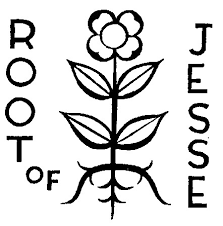
O Radix Jesse (Is. 11:1, 10): "O stock of Jesse, you stand as a signal for the nations; kings fall silent before you whom the peoples acclaim. O come to deliver us, and do not delay."
O Radix Jesse (Is. 11:1, 10): "O stock of Jesse, you stand as a signal for the nations; kings fall silent before you whom the peoples acclaim. O come to deliver us, and do not delay."
December 20th:
O Clavis David (Is. 9:6; 22:22): "O key of David and scepter of Israel, what you open no one else can close again; what you close no one can open. O come to lead the captive from prison; free those who sit in darkness and in the shadow of death."
O Clavis David (Is. 9:6; 22:22): "O key of David and scepter of Israel, what you open no one else can close again; what you close no one can open. O come to lead the captive from prison; free those who sit in darkness and in the shadow of death."
December 21st:
O Oriens (Is. 9:1): "O Rising Sun, you are the splendor of eternal light and the sun of justice. O come and enlighten those who sit in darkness and in the shadow of death."
O Oriens (Is. 9:1): "O Rising Sun, you are the splendor of eternal light and the sun of justice. O come and enlighten those who sit in darkness and in the shadow of death."
December 22nd:
O Rex Gentium (Is. 2:4; 9:5): "O King whom all the peoples desire, you are the cornerstone which makes all one. O come and save man whom you made from clay."
O Rex Gentium (Is. 2:4; 9:5): "O King whom all the peoples desire, you are the cornerstone which makes all one. O come and save man whom you made from clay."
December 23rd:
O Emmanuel (Is. 7:14) : "O Emmanuel, you are our king and judge, the One whom the peoples await and their Savior. O come and save us, Lord, our God."
O Emmanuel (Is. 7:14) : "O Emmanuel, you are our king and judge, the One whom the peoples await and their Savior. O come and save us, Lord, our God."
Friday, 6 December 2013
Alma Redemptoris Mater: (English Traslation)
This is one of four Marian antiphons, with following versicles and prayers, traditionally said or sung after night prayer, immediately before going to sleep. It is said from the beginning of Advent (from night before the fourth Sunday before Christmas) through February 1.
 http://en.wikipedia.org/wiki/Alma_Redemptoris_Mater
O Loving Mother of our Redeemer
O loving Mother of our Redeemer, gate of heaven, star of the sea,
Hasten to aid thy fallen people who strive to rise once more.
Thou who brought forth thy holy Creator, all creation wond'ring,
Yet remainest ever Virgin, taking from Gabriel's lips
that joyful "Hail!": be merciful to us sinners.
Up through the day before Christmas Eve:
V. The Angel of the Lord declared unto Mary.
R. And she conceived by the Holy Spirit.
Let us pray. Pour forth, we beseech Thee, O Lord, Thy grace into our hearts, that we, to whom the incarnation of Christ, Thy Son, was made known by the message of an angel, may by His passion and cross be brought to the glory of His resurrection, through the same Christ our Lord. Amen.
From Christmas Eve on:
V. Thou gavest birth without loss of thy virginity:
R. Intercede for us, O holy Mother of God.
Let us pray. O God, Who by the fruitful virginity of blessed Mary hast offered unto the human race the rewards of eternal salvation, grant, we beseech thee, that we may know the effects of her intercession, through whom we have deserved to receive the author of life, our Lord Jesus Christ, Thy Son. Amen.
Tuesday, 3 December 2013
Be conquered by Jesus and Feel the Shame of our Limitations!
I am just overwhelmed by reading this text of Pope Francis' homily . Jesus, my Lord, give me the grace of shame of my limitaions.Help me to be conquered by You. Yes, help me to be humble before You O my God, and before my brethren.
“Is Christ the centre of my life? Do I really put Christ at the centre of my life?”

A woman kisses Pope Francis' hand as he arrives to celebrate a private Mass at the Church of the Gesu in Rome July 31 http://www.catholicworldreport.com/Blog/2472/pope_francis_homily_on_the_feast_of_st_ignatius_of_loyola.aspx#.Up56jtIW34s
The text of Pope Francis' homily at the Gesù for the
Feast of Saint Ignatius of Loyola:
In this Eucharist in which we celebrate our Father Ignatius of Loyola, in light of the Readings we have heard, I would like to propose three simple thoughts guided by three expressions: to put Christ and the Church in the centre; to allow ourselves to be conquered by Him in order to serve; to feel the shame of our limitations and our sins, in order to be humble before Him and before the brothers.
1. The emblem of us Jesuits is a monogram, the acronym of “Jesus, the Saviour of Mankind” (IHS). Every one of you can tell me: we know that very well! But this crest continually reminds us of a reality that we must never forget: the centrality of Christ for each one of us and for the whole Company, the Company that Saint Ignatius wanted to name “of Jesus” to indicate the point of reference. Moreover, even at the beginning of the Spiritual Exercises he places our Lord Jesus Christ, our Creator and Saviour (Spiritual Exercises, 6) in front of us. And this leads all of us Jesuits, and the whole Company, to be “decentred,” to have “Christ more and more” before us, the “Deus semper maior”[God is always greater than human attempts to understand], the “intimior intimo meo”[“God is more intimate to me than I am to myself.”], that leads us continually outside ourselves, that brings us to a certain kenosis, a “going beyond our own loves, desires, and interests” (Sp. Ex., 189). Isn’t it obvious, the question for us? For all of us? “Is Christ the centre of my life? Do I really put Christ at the centre of my life?” Because there is always the temptation to want to put ourselves in the centre. And when a Jesuit puts himself and not Christ in the centre, he goes astray. In the first Reading, Moses forcefully calls upon the people to love the Lord, to walk in His ways, “because He is your life” (cf. Deut. 30, 16-20). Christ is our life! The centrality of Christ corresponds also to the centrality of the Church: they are two flames that cannot be separated: I cannot follow Christ except in and with the Church. And even in this case we Jesuits and the whole Company, are not at the centre, we are, so to speak, “displaced”, we are at the service of Christ and of the Church, the Bride of Christ our Lord, who is our Holy Mother Hierarchical Church (cf. Sp. Ex. 353).To be men routed and grounded in the Church: that is what Jesus desires of us. There cannot be parallel or isolated paths for us. Yes, paths of searching, creative paths, yes, this is important: to go to the peripheries, so many peripherie s. This takes creativity, but always in community, in the Church, with this membership that give us the courage to go forward. To serve Christ is to love this concrete Church, and to serve her with generosity and with the spirit of obedience.
2. What is the way to live this double centrality? Let us look at the experience of Saint Paul, which was also the experience of Saint Ignatius. The Apostle, in the Second Reading that we heard, writes: I press on towards the perfection of Christ, “because I have indeed been conquered by Jesus Christ” (Phil. 3:12). For Paul it came along the road to Damascus, for Ignatius in his house at Loyola, but the fundamental point is the same: to allow oneself to be conquered by Christ. I seek Jesus, I serve Jesus, because He sought me first, because I was conquered by Him: and this is the heart of our experience. But He is first, always. In Spanish there is a word that is very graphic, that explains this well: He “primerea” first ahead of us, “El nos primerea”. He is always first. When we arrive, He has already arrived and is expecting us. And here I want to recall the meditation on the Kingdom in the Second Week. Christ our Lord, the eternal King, calls each one of us, saying to us: “He who wants to come with Me must work with Me, because following Me in suffering, he will follow after Me likewise in glory” (Sp. Ex. 95): Being conquered by Christ in order to offer to this King our whole person and all our hard work (cf. Sp. Ex. 96); to say to the Lord that he would do anything for His greater service and praise, to imitate Him in bearing even injury, contempt, poverty (Sp. Ex. 98). But I think of our brother in Syria in this moment. To allow ourselves to be conquered by Christ means to be always directed towards what is in front of me, toward the goal of Christ (cf. Phil. 3:14), and to ask oneself with truth and sincerity: “What have I done for Christ? What am doing for Christ? What must I do for Christ?” (cf. Sp. Ex. 53).
3. And I come to the final point. In the Gospel, Jesus says to us: “Whoever would save his life will lose it, but whoever loses his life for my sake will save it . . . If anyone is ashamed of me . . .” (Lk 9:23). And so on. The shame of the Jesuit. The invitation that Jesus makes is for us to never be ashamed of Him, but to always follow Him with total dedication, trusting Him and entrusting ourselves to Him. But looking at Jesus, as Saint Ignatius teaches us in the First Week, above all looking at Christ crucified, we have that very human and noble feeling that is the shame of not reaching the highest point; we look at the wisdom of Christ and at our ignorance; at His omnipotence and our weakness; at His justice and our iniquity; at His goodness and our wickedness (cf. Sp. Ex. 59). Ask for the grace of shame; the shame that comes from the constant dialogue of mercy with Him; the shame that makes us blush before Jesus Christ; the shame that puts us in tune with the heart of Christ who is made sin for me; the shame that harmonises our heart in tears and accompanies us in the daily following of “my Lord”. And this always brings us, as individuals and as a Company, to humility, to living this great virtue. Humility that makes us understand, each day, that it is not for us to build the Kingdom of God, but it is always the grace of God working within us; humility that pushes us to put our whole being not at the service of ourselves and our own ideas, but at the service of Christ and of the Church, like clay pots, fragile, inadequate, insufficient, but having within them an immense treasure that we carry and that we communicate (2 Cor. 4:7). It is always pleasant for me to think of the sunset of the Jesuit, when a Jesuit finishes his life, when the sun goes down. And two icons of the sunset of the Jesuit always come to me: one classical, that of Saint Francis Xavier, looking at China. Art has painted this sunset so many times, this ‘end’ of Xavier. Even in literature, in that beautiful peace by Pemàn. At the end, having nothing, but in the sight of the Lord; it does me good to thing about this. The other sunset, the other icon that comes to me as an example, is that of Padre Arrupe in the last interview in the refugee camp, when he told us – something he himself said – “I say this as if it were my swan song: pray.” Prayer, the union with Jesus. And, after having said this, he caught the plane, and arrived at Rome with the stroke that was the beginning of so long and so exemplary a sunset. Two sunsets, two icons that all of us would do well to look at, and to go back to these two. And to ask for the grace that our sunset will be like theirs.
Dear brothers, let us turn again to Our Lady, to her who bore Christ in her womb and accompanied the first steps of the Church. May she help us to always put Christ and His Church at the centre of our lives and of our ministry. May she, who was the first and most perfect disciple of her Son help us to allow ourselves to be conquered by Christ in order to follow Him and to serve Him in every situation. May she that answered the announcement of the Angel with the most profound humility: “Behold the handmaid of the Lord, be it done unto me according to thy word” (Lk 1:38), make us feel the shame for our inadequacy before the treasure that has been entrusted to us, in order to live the virtue of humility before God. May our journey be accompanied by the paternal intercession of Saint Ignatius and of all the Jesuit saints, who continue to teach us to do all things “ad majorem Dei gloriam.”
Text from page http://en.radiovaticana.va/news/2013/07/31/pope_francis_celebrates_mass:_a_jesuit_perspective_/en1-715795
of the Vatican Radio website
“Is Christ the centre of my life? Do I really put Christ at the centre of my life?”
A woman kisses Pope Francis' hand as he arrives to celebrate a private Mass at the Church of the Gesu in Rome July 31 http://www.catholicworldreport.com/Blog/2472/pope_francis_homily_on_the_feast_of_st_ignatius_of_loyola.aspx#.Up56jtIW34s
The text of Pope Francis' homily at the Gesù for the
Feast of Saint Ignatius of Loyola:
In this Eucharist in which we celebrate our Father Ignatius of Loyola, in light of the Readings we have heard, I would like to propose three simple thoughts guided by three expressions: to put Christ and the Church in the centre; to allow ourselves to be conquered by Him in order to serve; to feel the shame of our limitations and our sins, in order to be humble before Him and before the brothers.
1. The emblem of us Jesuits is a monogram, the acronym of “Jesus, the Saviour of Mankind” (IHS). Every one of you can tell me: we know that very well! But this crest continually reminds us of a reality that we must never forget: the centrality of Christ for each one of us and for the whole Company, the Company that Saint Ignatius wanted to name “of Jesus” to indicate the point of reference. Moreover, even at the beginning of the Spiritual Exercises he places our Lord Jesus Christ, our Creator and Saviour (Spiritual Exercises, 6) in front of us. And this leads all of us Jesuits, and the whole Company, to be “decentred,” to have “Christ more and more” before us, the “Deus semper maior”[God is always greater than human attempts to understand], the “intimior intimo meo”[“God is more intimate to me than I am to myself.”], that leads us continually outside ourselves, that brings us to a certain kenosis, a “going beyond our own loves, desires, and interests” (Sp. Ex., 189). Isn’t it obvious, the question for us? For all of us? “Is Christ the centre of my life? Do I really put Christ at the centre of my life?” Because there is always the temptation to want to put ourselves in the centre. And when a Jesuit puts himself and not Christ in the centre, he goes astray. In the first Reading, Moses forcefully calls upon the people to love the Lord, to walk in His ways, “because He is your life” (cf. Deut. 30, 16-20). Christ is our life! The centrality of Christ corresponds also to the centrality of the Church: they are two flames that cannot be separated: I cannot follow Christ except in and with the Church. And even in this case we Jesuits and the whole Company, are not at the centre, we are, so to speak, “displaced”, we are at the service of Christ and of the Church, the Bride of Christ our Lord, who is our Holy Mother Hierarchical Church (cf. Sp. Ex. 353).To be men routed and grounded in the Church: that is what Jesus desires of us. There cannot be parallel or isolated paths for us. Yes, paths of searching, creative paths, yes, this is important: to go to the peripheries, so many peripherie s. This takes creativity, but always in community, in the Church, with this membership that give us the courage to go forward. To serve Christ is to love this concrete Church, and to serve her with generosity and with the spirit of obedience.
2. What is the way to live this double centrality? Let us look at the experience of Saint Paul, which was also the experience of Saint Ignatius. The Apostle, in the Second Reading that we heard, writes: I press on towards the perfection of Christ, “because I have indeed been conquered by Jesus Christ” (Phil. 3:12). For Paul it came along the road to Damascus, for Ignatius in his house at Loyola, but the fundamental point is the same: to allow oneself to be conquered by Christ. I seek Jesus, I serve Jesus, because He sought me first, because I was conquered by Him: and this is the heart of our experience. But He is first, always. In Spanish there is a word that is very graphic, that explains this well: He “primerea” first ahead of us, “El nos primerea”. He is always first. When we arrive, He has already arrived and is expecting us. And here I want to recall the meditation on the Kingdom in the Second Week. Christ our Lord, the eternal King, calls each one of us, saying to us: “He who wants to come with Me must work with Me, because following Me in suffering, he will follow after Me likewise in glory” (Sp. Ex. 95): Being conquered by Christ in order to offer to this King our whole person and all our hard work (cf. Sp. Ex. 96); to say to the Lord that he would do anything for His greater service and praise, to imitate Him in bearing even injury, contempt, poverty (Sp. Ex. 98). But I think of our brother in Syria in this moment. To allow ourselves to be conquered by Christ means to be always directed towards what is in front of me, toward the goal of Christ (cf. Phil. 3:14), and to ask oneself with truth and sincerity: “What have I done for Christ? What am doing for Christ? What must I do for Christ?” (cf. Sp. Ex. 53).
3. And I come to the final point. In the Gospel, Jesus says to us: “Whoever would save his life will lose it, but whoever loses his life for my sake will save it . . . If anyone is ashamed of me . . .” (Lk 9:23). And so on. The shame of the Jesuit. The invitation that Jesus makes is for us to never be ashamed of Him, but to always follow Him with total dedication, trusting Him and entrusting ourselves to Him. But looking at Jesus, as Saint Ignatius teaches us in the First Week, above all looking at Christ crucified, we have that very human and noble feeling that is the shame of not reaching the highest point; we look at the wisdom of Christ and at our ignorance; at His omnipotence and our weakness; at His justice and our iniquity; at His goodness and our wickedness (cf. Sp. Ex. 59). Ask for the grace of shame; the shame that comes from the constant dialogue of mercy with Him; the shame that makes us blush before Jesus Christ; the shame that puts us in tune with the heart of Christ who is made sin for me; the shame that harmonises our heart in tears and accompanies us in the daily following of “my Lord”. And this always brings us, as individuals and as a Company, to humility, to living this great virtue. Humility that makes us understand, each day, that it is not for us to build the Kingdom of God, but it is always the grace of God working within us; humility that pushes us to put our whole being not at the service of ourselves and our own ideas, but at the service of Christ and of the Church, like clay pots, fragile, inadequate, insufficient, but having within them an immense treasure that we carry and that we communicate (2 Cor. 4:7). It is always pleasant for me to think of the sunset of the Jesuit, when a Jesuit finishes his life, when the sun goes down. And two icons of the sunset of the Jesuit always come to me: one classical, that of Saint Francis Xavier, looking at China. Art has painted this sunset so many times, this ‘end’ of Xavier. Even in literature, in that beautiful peace by Pemàn. At the end, having nothing, but in the sight of the Lord; it does me good to thing about this. The other sunset, the other icon that comes to me as an example, is that of Padre Arrupe in the last interview in the refugee camp, when he told us – something he himself said – “I say this as if it were my swan song: pray.” Prayer, the union with Jesus. And, after having said this, he caught the plane, and arrived at Rome with the stroke that was the beginning of so long and so exemplary a sunset. Two sunsets, two icons that all of us would do well to look at, and to go back to these two. And to ask for the grace that our sunset will be like theirs.
Dear brothers, let us turn again to Our Lady, to her who bore Christ in her womb and accompanied the first steps of the Church. May she help us to always put Christ and His Church at the centre of our lives and of our ministry. May she, who was the first and most perfect disciple of her Son help us to allow ourselves to be conquered by Christ in order to follow Him and to serve Him in every situation. May she that answered the announcement of the Angel with the most profound humility: “Behold the handmaid of the Lord, be it done unto me according to thy word” (Lk 1:38), make us feel the shame for our inadequacy before the treasure that has been entrusted to us, in order to live the virtue of humility before God. May our journey be accompanied by the paternal intercession of Saint Ignatius and of all the Jesuit saints, who continue to teach us to do all things “ad majorem Dei gloriam.”
Text from page http://en.radiovaticana.va/news/2013/07/31/pope_francis_celebrates_mass:_a_jesuit_perspective_/en1-715795
of the Vatican Radio website
Subscribe to:
Posts (Atom)